Automotive lighting has transformed from crude, candle-lit lanterns designed solely to show where a horse-drawn carriage was heading into sophisticated, intelligent optical systems. Today, headlight design is no longer just about seeing the road in total darkness—it serves as a core safety component, a brand visual identifier, and an essential pillar for autonomous driving systems. Understanding how automotive lighting has evolved, where it stands today, and where it is heading provides a captivating look into vehicle engineering and safety innovation.
The Evolutionary Arc of Automotive Illumination
To appreciate modern optical capabilities, one must understand how automotive illumination developed over the last century. Each transition marked a significant leap in night vision and road safety.
- Acetylene Lanterns (Late 1800s – Early 1900s): Early automobiles utilized acetylene gas or oil lamps. These produced a weak glow, acting more as a marker for oncoming pedestrians than a beam to illuminate the driver’s path.
- Standard Incandescent Headlamps (1910s – 1960s): Electric sealed-beam headlights brought standardized illumination to mass-market vehicles. However, these filament-based bulbs were inefficient and produced dim, yellowish light that quickly degraded over time.
- Halogen Optics (1960s – Present): Halogen technology introduced a tungsten filament enclosed in halogen gas, significantly increasing brightness, lifespan, and energy efficiency. It became the global standard for decades and remains common in budget vehicles today.
- High-Intensity Discharge (HID / Xenon) Systems (1990s): Xenon lights represented a dramatic leap forward by replacing metallic filaments with an electric arc ignited between electrodes inside quartz glass filled with xenon gas. These provided intense, blue-white illumination with double the efficacy of halogen bulbs.
The Modern Era: LED and Laser Revolution
The automotive market underwent a massive revolution when solid-state lighting entered production lines. Today, two major technologies dominate high-performance vehicle optics.
Solid-State Light-Emitting Diodes (LEDs)
LEDs have fundamentally changed automobile exterior architecture. Unlike halogen or xenon bulbs, LEDs produce light through semiconductor electroluminescence. This provides several distinct engineering advantages:
- Minimal Thermal & Power Footprint: LEDs draw significantly lower wattage than traditional bulbs while delivering superior lumen output per watt, directly reducing electrical load on the battery and alternator.
- Instant On/Off Response: LED diodes reach maximum illumination in milliseconds. When applied to brake lights, this instantaneous response gives trailing drivers critical extra yards of stopping distance.
- Design Versatility: Because individual LED chips are tiny, designers can arrange them into signature light bars, sequential turn signals, and distinctive front-end brand identities.
Laser Light Optics
Laser lighting represents the cutting edge of ultra-high-range illumination. In these systems, laser diodes emit invisible, focused blue laser beams onto a reflector element coated with yellow phosphorus. The phosphorus fluoresces, converting the beam into a brilliant, soft white light.
Laser illumination can throw a high beam up to 600 meters—roughly double the range of conventional LEDs—while consuming less power. Because of its intense focus, laser optics allow for incredibly small lamp units without compromising beam distance.
Intelligent Beam Control and Adaptive Driving Beam (ADB)
Brighter lights are only effective if they do not blind oncoming traffic. The most significant shift in modern automotive lighting is the transition from static light bulbs to dynamic optical sensors.
Adaptive Driving Beam (ADB) systems, commonly known as Matrix LED technology, utilize segmented arrays of individual LEDs controlled by camera sensors mounted behind the windshield. When the camera detects oncoming vehicles or surrounding traffic, the electronic control unit (ECU) individually dims or turns off specific micro-LEDs within the array.
This creates a selective shade zone over the oncoming vehicle while maintaining full high-beam illumination on the surrounding road, signposts, and shoulders. Drivers gain maximum night vision without creating hazardous glare for other motorists.
Emerging Trends: OLEDs, Dynamic Projection, and Autonomous Integration
As the automotive sector transitions toward electric and autonomous platforms, lighting technology is taking on expanded roles beyond simple road illumination.
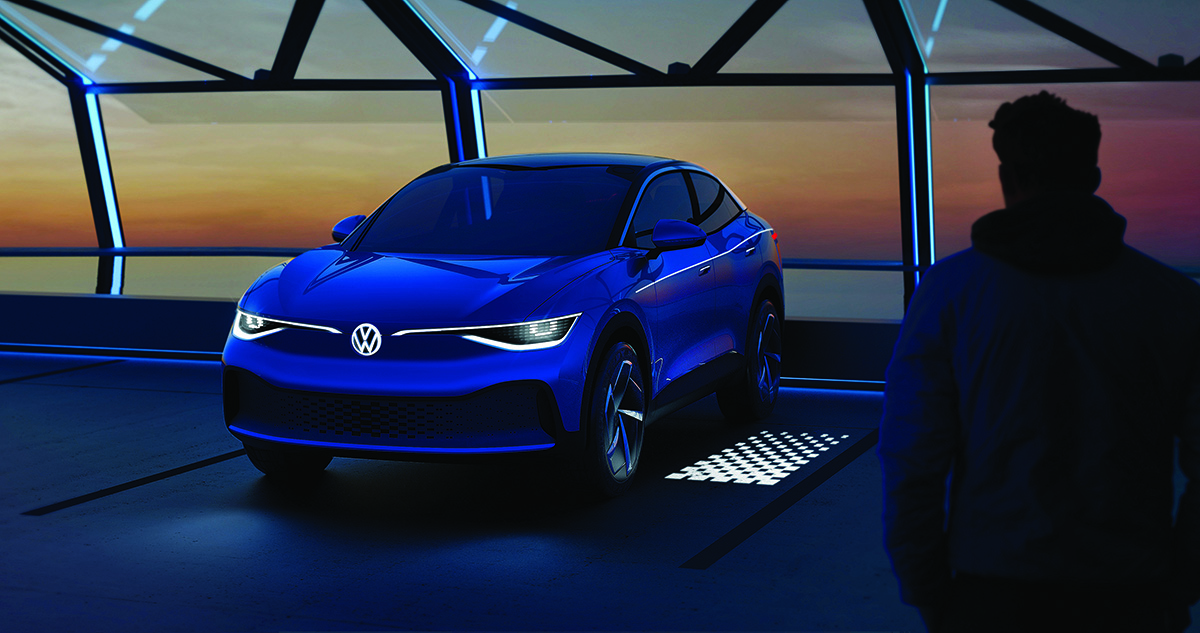
- Digital Light Processing (DLP): Advanced headlight projectors equipped with millions of micromirrors can project visual guidance directly onto the tarmac ahead. This includes highlighting navigation directions, displaying lane-width markers in narrow construction zones, or projecting pedestrian warning symbols onto the road surface.
- Organic LEDs (OLEDs): Unlike point-source LEDs, OLEDs emit light uniformly across an entire surface. Their ultra-thin profile and flexibility make them ideal for rear light clusters, displaying dynamic graphics, variable tail-light signatures, and custom animations.
- Vehicle-to-Everything (V2X) Visual Communication: Fully autonomous vehicles lack human drivers to make eye contact or wave pedestrians across a street. Dynamic light strips and projector headlamps will serve as communication interfaces, projecting clear visual signals to inform pedestrians when it is safe to cross in front of a self-driving car.
Conclusion
Automotive lighting has advanced from rudimentary flame lanterns to sophisticated optoelectronic networks capable of dynamic projection and real-time environment sensing. Far beyond aesthetic styling, contemporary lighting architectures sit at the intersection of active vehicle safety, efficiency, and human-machine interaction. As autonomous drive technology and digital connectivity mature, automobile illumination will remain a vital communication link between vehicles, drivers, and the surrounding environment.